
Ossining City Directory Runs
The clearest catalog trail for an Ossining city directory is a Reel 31 record described as “Ossining 1912/13-1930/31.” It identifies a real local run rather than a New York City substitute, and it specifically marks 1916 through 1923 as missing. The established Ossining directory collection locator also identifies digitized or indexed examples from 1912, 1914, 1924, 1926, 1928, and 1930. Treat those examples as access points, not evidence that every year survives online.
| Collection | Years | Where Held | Access |
|---|---|---|---|
| Ossining city-directory reel, Reel 31 | 1912/13-1930/31; 1916-1923 missing | Allen County Public Library catalog | Cataloged reel; confirm the volume before relying on it |
| Indexed or digitized Ossining volumes | Examples: 1912, 1914, 1924, 1926, 1928, 1930 | U.S. directories collections and library catalogs | Account, paid, or library-licensed access may apply |
| Local-history directories and companion materials | Exact Ossining run not publicly enumerated | Ossining Public Library | Ask Reference for shelf, microfilm, and database access |
| Local newspaper titles | Title-specific runs from 1868 to 1998, with gaps | Ossining Historical Society, NYS Library, and other repositories | Film, paper, or digital access varies by title |
The title page of each volume is the source for its publisher and its own abbreviation key. The located research did not confirm one publisher across every Ossining volume, so calling the whole run by a publisher name would overstate the evidence. The missing years are a documented break, not blank years to fill with guesses.
Ossining Directory Research Desk
Ossining Public Library’s research tools connect local researchers to FamilySearch, Fulton History, and Chronicling America. The library is at 53 Croton Avenue, and its adult nonfiction and local-history material is on the second floor. Reference staff can be asked for historical directories, telephone books, yearbooks, obituary clipping files, newspaper microfilm, and local vertical files. The public catalog did not disclose a complete directory shelf run, so staff confirmation is the sound next step.
The library research screen below is a useful reminder that an old name usually needs more than one search route. Start with the directory, then use a newspaper or a cataloged database to check the address and date. Library database access can be licensed for use in the building rather than available from home.
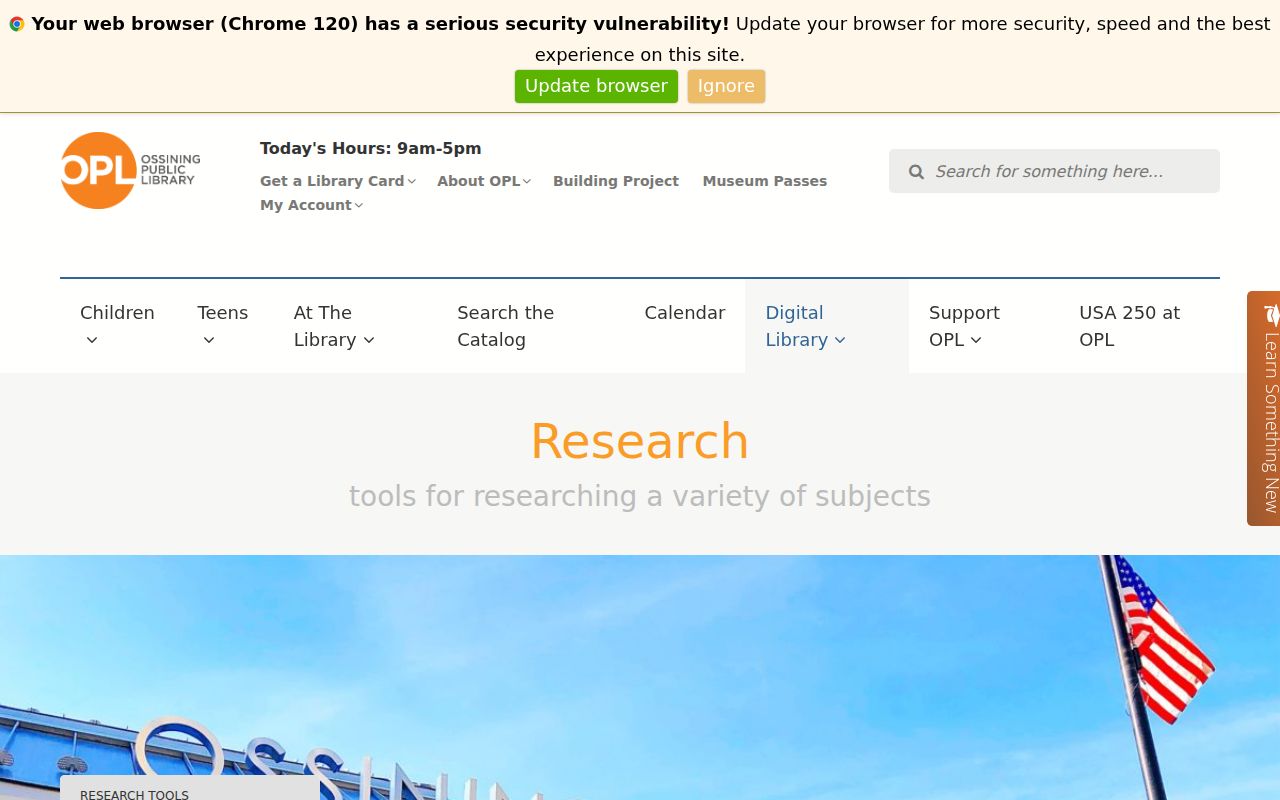
That research path supports a careful directory search without presenting the library as a current resident database.
Note: Ask Reference to confirm the exact year, title page, and access method before scheduling a directory search.
Ossining Directory Years Online
The located digital evidence is selective. U.S. directories collection results identify the listed Ossining examples, while a 1924 directory is identified through MyHeritage and a FamilySearch Library catalog describes an Ossining directory with a classified business section. Some services require an account or library access. A search result or OCR transcript is only a lead, so inspect the page image and capture the volume title, printed year, and page number with the finding.
The collection-locator image comes from the genealogy directory index, which is useful for identifying the local run. It is not a government custodian and should not be treated as proof of an entry on its own.
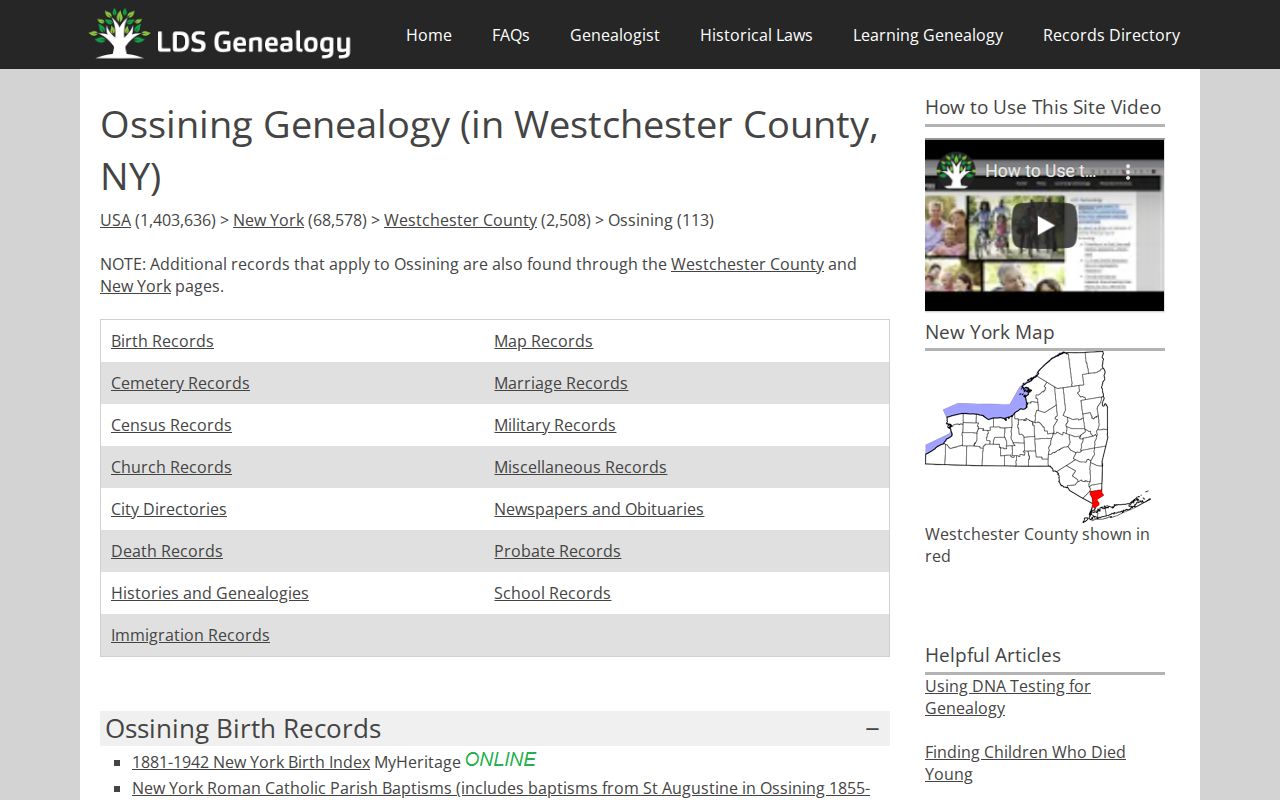
Use the locator to choose a year, then verify the printed page in the actual collection or through the library.
Ossining City Directory Name Bridge
Ossining changed its municipal name from Sing Sing on March 25, 1901. The known city-directory run begins later, but newspapers, deeds, obituaries, and source catalogs can still use the earlier name. Search both labels when following a family into or out of the directory years. Sparta also matters: its trolley connection came in 1893, followed by Village annexation in 1906 and 1907, so older records may describe the same area as Sparta, a town or hamlet context, or the Village.
This is a local records story, not a spelling exercise. Retain the place name as printed beside the record date. That practice helps explain why a household can appear under a different place label even when the modern address is in Ossining.
| 1901 | Sing Sing became Ossining, creating a historical name bridge for newspapers and records. |
|---|---|
| 1906-1907 | Sparta was annexed into the expanded Village after its earlier trolley connection. |
| 1912/13-1930/31 | The located Reel 31 city-directory run begins and ends within this span. |
| 1916-1923 | The reel identifies these directory years as missing. |
Note: A dated Sing Sing or Sparta reference can be a meaningful search term, not evidence that a modern address changed hands.
Read an Ossining City Directory Entry
An alphabetical entry usually combines compact facts. Period U.S. directory entries can show a surname, given name or initial, spouse notation, occupation, employer or business, and a street address. Some may include a telephone number, boarding-house placement, or a marker related to household status. A classified section can connect a proprietor to a storefront, but it does not prove residence. Copy only the words and marks actually printed in the volume.
| Name | Surname plus given name or initials, sometimes with a spouse or relative reference |
|---|---|
| Occupation | Work or business wording, and sometimes an employer or business name |
| Address | Printed house number and street, which should be read with the directory year |
| Household notation | Marks such as “h,” “wid,” or “bds” only when the volume’s own key explains them |
| Classified listing | Business type, proprietor or manager, and business address rather than proof of a home |
- Criss-cross directory
- A volume arranged by street and number, then occupant or subscriber. Its presence in an Ossining volume is unconfirmed and should be checked at the repository.
- Householder index
- An index centered on a household or address rather than the standard alphabetical name sequence.
- Abbreviation key
- The volume’s explanation of its shorthand. Photograph or transcribe it before expanding any mark.
Ossining’s Directory Gap Matters
The 1916-1923 gap is one of the most important limits in the Ossining directory run. A family listed in 1914 and then in 1924 may have moved, remained, changed its household, or simply passed through years that lack a located volume. The record does not decide which explanation is true. Build a timeline with a clear “not located” entry for each missing directory year instead of carrying a name forward.
Federal census schedules help test the interval. Schedules through 1950 are available under the 72-year public-access rule, while the accessible census years around this run include 1910, 1920, 1930, and 1940. Household relationships, ages, and birthplaces can separate same-name people. Directory addresses and occupations then add detail between census dates.
Ossining Newspaper Titles by Date
Newspapers are a useful check when a directory entry suggests a move, death, business, or family connection. The New York State Library’s newspaper project lists local titles with their own date ranges, including Democratic Register from 1868 to 1931, Daily Citizen from 1902 to 1919, and Citizen Register from 1932 to 1998. Other titles include The Sing-Sing News, Sentinel, Ossining Evening Register, Ossining News, Ossining Review, and Ossining Courier. Holdings have gaps and are split among repositories.
Search the title that matches the date, not a presumed single “Ossining newspaper.” Fulton History and Chronicling America can surface leads through the library’s research links, but OCR must be checked against the newspaper image before it is used as evidence.
Trace Ossining City Directories by Household
Use a known full name and address from a deed, assessment record, obituary, or family document. Search surname variants, initials, spouse or relative names, and occupation. If a reverse section is actually present, test the address too. Keep the directory year separate from a move date because compilation and subscription dates do not necessarily show when a person arrived or left.
- Record the first confirmed entry with its printed name, address, occupation, page, and repository.
- Make a year-by-year grid for the located volumes and mark 1916 through 1923 as a documented gap.
- Search Sing Sing and Sparta terms where the person’s date or neighborhood calls for them.
- Pair the intervening directory years with the 1900, 1910, 1920, 1930, 1940, and 1950 census schedules where accessible.
- Use deeds, tax mailing information, probate, permits, newspapers, or cemetery records to test a move or disappearance.
A directory lists a subscriber or occupant clue, while a deed names title parties. Neither should replace the other. For a current parcel-based record trail, use the Ossining street directory lookup after the historical address is identified.
Ossining Historical Research Paths
The Ossining Historical Society is an appointment-only local source for books, manuscripts, pictures, records, relics, and research files. Its research-information request costs $20 and can help with family, house, cemetery, photo, and newspaper leads. For county material, the Westchester County Archives Reading Room combines county records with the Westchester County Historical Society library, including maps, deeds, wills, naturalizations, local-history books, and genealogical files.
The Archives Reading Room is at 2199 Saw Mill River Road in Elmsford. Researchers complete an application, review the rules, and show photo ID before staff deliver material from closed storage. Its research-by-mail route charges $15 for a specific record search or $25 per hour for custom research, with payment before work starts.
The Society’s research source provides a local follow-up when a directory creates a precise question. Bring the name, date range, historic place label, and directory page reference rather than asking for a broad person search.
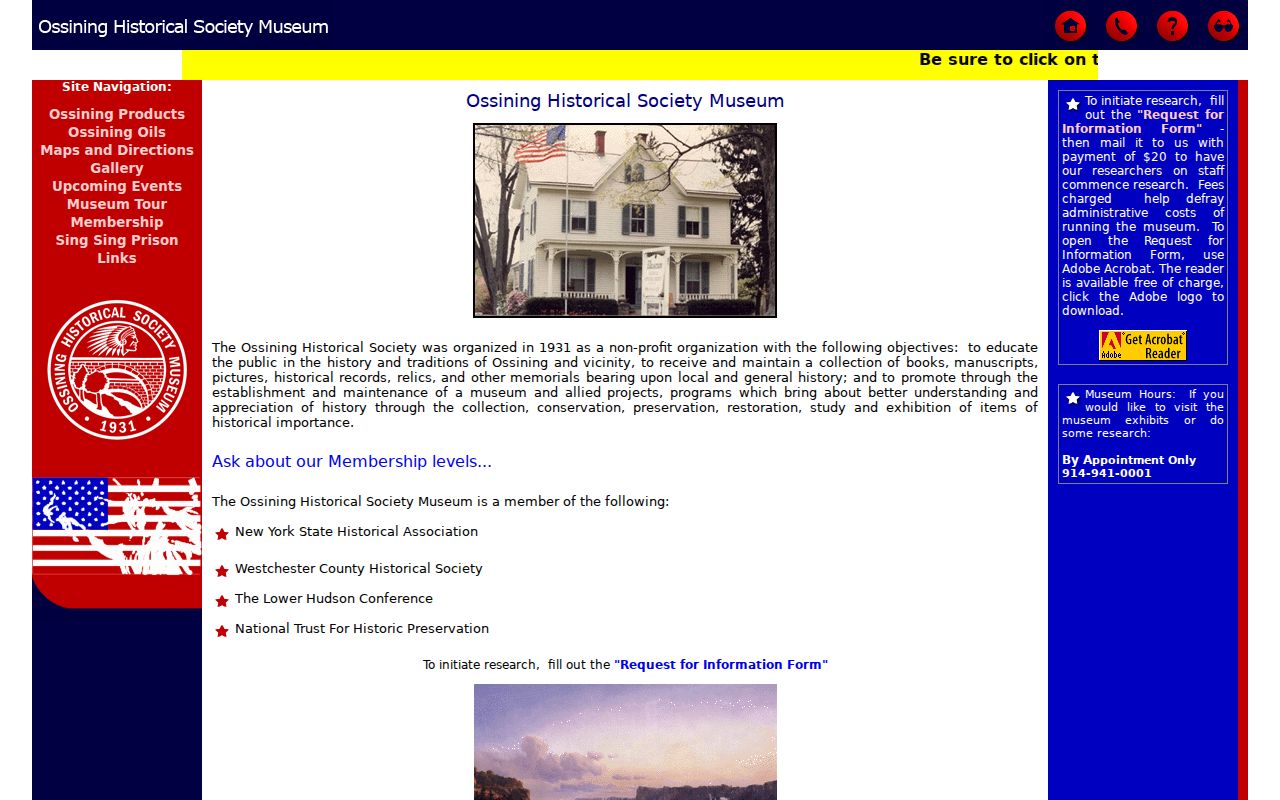
That appointment-based route is especially useful for checking a directory clue against photographs, local files, and title-specific newspaper holdings.